
VDG INSIGHTS | Automotive Industry Outlook
Is the UK's EV Transition Plan Still Realistic?

The UK's EV Ambitions
Back in 2024, the UK Government introduced the regulatory framework that has been shaping the automotive industry ever since: the Zero Emission Vehicle (ZEV) Mandate.
The mandate requires manufacturers to ensure that an increasing proportion of the new cars and vans they sell are zero-emission vehicles, with annual targets rising towards the Government's long-term ambitions. The wider objective is for 80% of new cars and 70% of new vans sold by 2030 to be zero-emission, increasing to 100% of both new cars and vans by 2035. Alongside this, the Government plans to end the sale of cars solely powered by petrol and diesel by 2030. While hybrid vehicles will continue to play an important role during the transition, the long-term goal remains a fully zero-emission new vehicle market.
Since the mandate was introduced, significant progress has been made across the automotive industry. Battery electric vehicles (BEVs) now account for an increasing share of new vehicle registrations, manufacturers continue to invest heavily in new electric models, and the UK's charging infrastructure has expanded rapidly. As of June 2026, there are more than 121,000 public EV charging connectors available across approximately 46,700 locations nationwide. Consumer choice has also grown considerably, driven not only by established manufacturers but also by the rapid expansion of Chinese automotive brands entering the UK market.
Despite this progress, the pace of the transition remains the subject of significant debate. While EV adoption continues to grow, many argue that consumer demand has not increased quickly enough to match the ambitious targets set by the Government. Affordability, charging infrastructure, energy costs and wider economic pressures continue to influence purchasing decisions, while changing market conditions have led parts of the automotive industry to question whether the current roadmap remains achievable without further support or adjustments.
As a result, the discussion is no longer centred on whether the UK will transition to electric vehicles, but whether the current timeline and regulatory framework remain aligned with today's economic and market realities.
The Challenges Facing the Industry
Consumer affordability has been, and continues to be, one of the biggest factors influencing the UK's transition to electric vehicles. Purchase prices are becoming increasingly competitive, EVs are more accessible than ever before, and for many motorists, day-to-day running costs remain lower than those of equivalent petrol or diesel vehicles. However, as electric vehicle adoption continues to grow, attention is increasingly turning to how EV drivers will contribute to the maintenance of the UK's road network as fuel duty revenues decline. To address this, the Government are introducing Electric Vehicle Excise Duty (eVED) from April 2028. Under the current proposals, fully electric vehicles will pay 3p per mile, while plug-in hybrid vehicles will pay 1.5p per mile, alongside the existing Vehicle Excise Duty (VED) regime.
The introduction of Vehicle Excise Duty (VED) for electric vehicles from April 2025 also marked the end of one of the key financial incentives that had previously supported adoption. But the government maintains that, even with eVED, most electric vehicle drivers will continue to pay less in motoring taxes than the average petrol or diesel driver currently contributes through fuel duty.
Nevertheless, the proposal has sparked considerable debate across the automotive industry. Supporters argue that eVED is a necessary step towards creating a sustainable taxation model as the transition away from fossil fuels accelerates. Others, however, question whether introducing a mileage-based charge while the Government is still actively encouraging EV adoption could discourage some consumers from making the switch, particularly those who travel higher annual mileages.
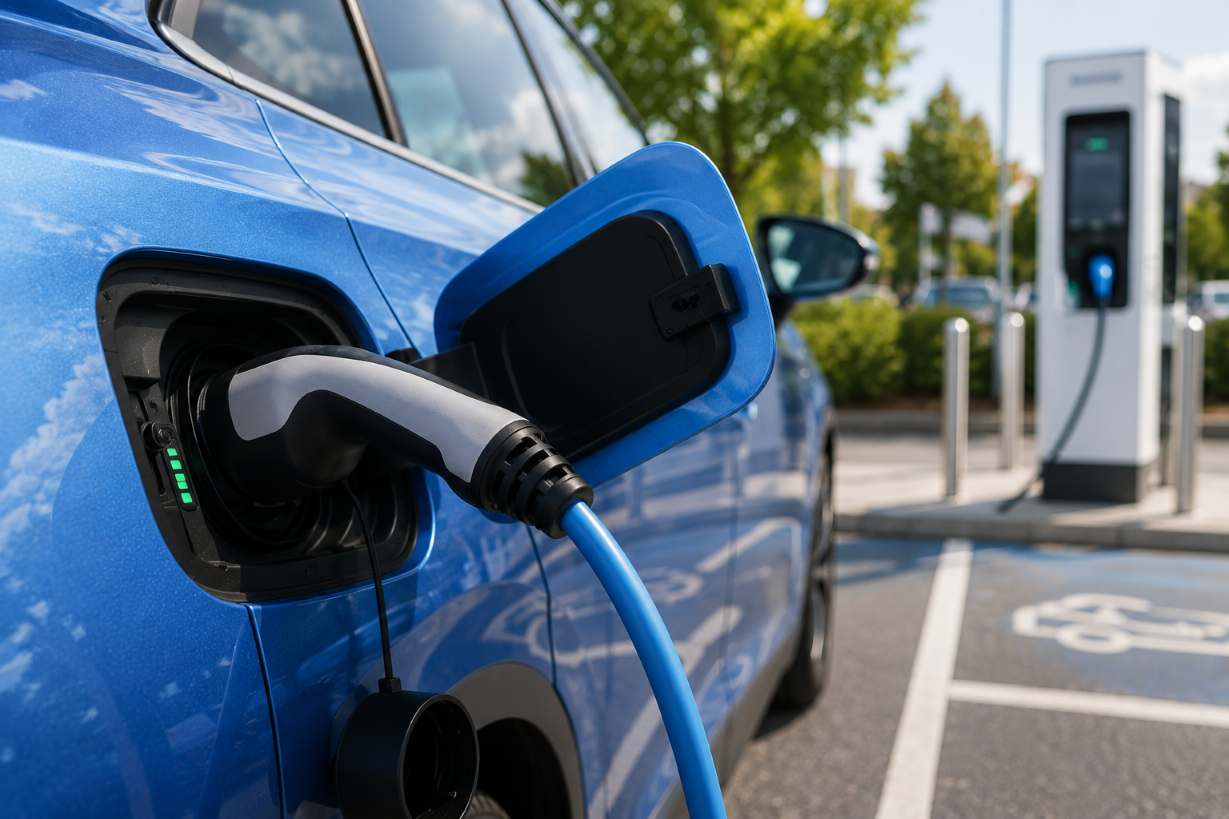
Charging infrastructure also remains a key challenge for those looking at transitioning to an EV. For drivers with access to off-street parking, home charging is often the most convenient and cost-effective option, particularly when charging overnight on lower electricity tariffs. However, as we know, many households across the UK do not have access to private driveways and therefore continue to rely on the public charging network. Although the UK's charging infrastructure has expanded significantly in recent years, the availability, reliability and cost of public charging can vary considerably depending on location. For motorists without the option of home charging, this can make electric vehicle ownership less convenient and, in some cases, more expensive. As a result, concerns over charging accessibility continue to be cited as a factor that may deter some consumers from making the switch to an electric vehicle.
Despite the challenges surrounding affordability and charging infrastructure, fleet operators continue to play a key role in the UK's transition to electric mobility. Company cars, business fleets and leasing companies all account for a percentage of new vehicle registrations, making their investment decisions crucial to achieving the UK's zero-emission ambitions. Nevertheless, many businesses face the challenge of supporting employees without access to home charging, who often rely on the public charging network, where availability, reliability and costs can vary considerably. Residual values remain another key consideration.
As more used electric vehicles enter the market, uncertainty around depreciation continues to influence leasing costs and future procurement decisions. Despite these challenges, fleet operators remain at the forefront of the UK's EV transition and will continue to play a vital role in determining whether the Government's long-term zero-emission targets can be achieved.
Different Views Across the Industry
While there is broad agreement that the UK is moving towards a zero-emission future, opinions differ on the pace of the transition and how it should be achieved. While some parts of the automotive industry believe the UK's EV transition should be reviewed, others argue that maintaining the current roadmap is essential to ensuring long-term investment and confidence.
Supporters of the existing targets believe they are necessary to encourage investment, accelerate innovation and provide manufacturers with the certainty needed to continue developing new technologies. They argue that maintaining a clear long-term direction will increase consumer choice, encourage further investment in charging infrastructure and support the UK's ambitions to reduce transport emissions.
Those calling for a review, however, believe the transition should better reflect current market conditions. They point to slower-than-expected consumer demand, affordability concerns, changing economic conditions and increasing global competition as reasons why greater flexibility may be needed to ensure the transition remains commercially sustainable.
Consumer opinion is equally divided. According to Auto Trader's Road to 2030 report, 62% of UK car buyers would now consider purchasing an electric vehicle as their next car, demonstrating growing acceptance of EVs. However, barriers remain. Separate Auto Trader research found that 84% of recent car buyers still believe electric vehicles are too expensive to purchase, while 69% consider public charging to be inconvenient. These findings suggest that although interest in electric vehicles continues to grow, practical and financial concerns are still preventing many consumers from making the switch.
Ultimately, both sides share the same long-term objective of achieving a zero-emission future. The debate is no longer about whether electric vehicles will play a significant role in the future of motoring, but whether the current pace of transition strikes the right balance between environmental ambition, consumer confidence, business investment and the realities of today's automotive market.
Looking Ahead
So, is the UK's EV transition plan still realistic?
The answer depends on perspective. There is little doubt that the UK has made significant progress since the introduction of the ZEV Mandate. Electric vehicle registrations continue to grow, charging infrastructure is expanding, and manufacturers are investing heavily in new technologies and model ranges.
However, the transition is proving to be more complex than originally anticipated. Consumer affordability, charging accessibility, evolving taxation and changing market conditions all continue to influence the pace of adoption, while businesses and policymakers seek to balance environmental ambitions with commercial realities.
What remains clear is that the UK's journey towards a zero-emission future is well underway. The debate is no longer about whether the future is electric, but how the industry, policymakers and consumers can work together to ensure that the transition is both achievable and sustainable.