
VDG INSIGHTS | Automotive Industry Outlook
From Fuel Shock to EV Surge: How the Middle East Conflict is Reshaping the UK Automotive Sector

The ongoing conflict in the Middle East is not solely a geopolitical issue; alongside its effects on many other sectors, it is already having a direct and multi-layered impact on the UK automotive industry. From ongoing supply chain disruptions to the continued surge in fuel prices, the sector is facing mounting pressure on multiple fronts, and the automotive sector is being left with uncertainty about what is next to come.
Fuel Prices Are Rising Sharply
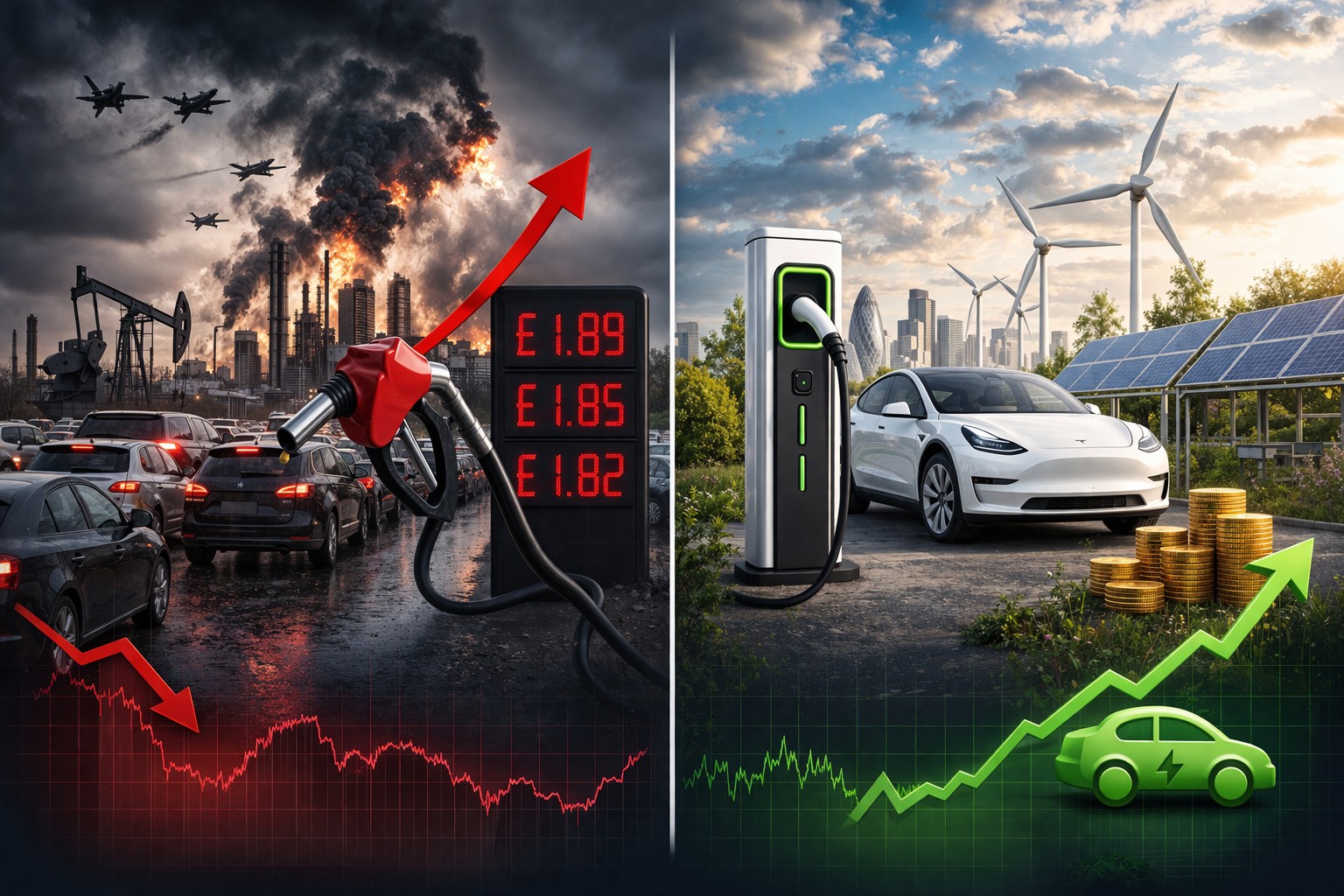
Energy infrastructure has been directly targeted as part of the ongoing conflict in the Middle East, further exacerbating global market instability. As a result, fuel prices have risen significantly, with petrol increasing by nearly 13% and diesel by close to 20%. Diesel, in particular, has reached its highest level since January 2023, presenting a critical challenge for sectors heavily reliant on fuel consumption, especially heavy commercial vehicles and high-mileage drivers.
The increase has risen quite rapidly over the first 3 weeks of March 2026, driving not only supply concerns but also uncertainty and unpredictability about where this may lead, making cost planning increasingly difficult for consumers and businesses alike.
The impacts of this may be wider than just the rise in fuel pricing. It is raising broader questions for the automotive sector. Will the demand for cars shift? Will the EV transition accelerate? And how will industry priorities evolve in response to continued uncertainty?
Is the EV Transition Accelerating?
Since the conflict began, there has been a noticeable shift in consumer behaviour and priorities. The surge in fuel prices has driven buyers to become increasingly cost-conscious, prompting them to take a closer look at overall running costs when considering a vehicle purchase. As a result, many consumers are now exploring alternative options, with a growing number turning their attention towards electric vehicles (EVs).
This shift is already being reflected in market activity. Octopus Electric Vehicles reported to, The Independent, that enquiries for EV leasing have increased by 36% since the start of the conflict in the Middle East. Similarly, Renault has stated that its own enquiries have risen by 24% over the same period, highlighting a clear and accelerating change in consumer interest.
Consumers looking for ways to reduce their costs will find that there are alternatives to stabilise this, with EVs having more predictable running costs, with electricity being fixed through tariffs and smarter charging, with off-peak periods costing less to charge, thus charging your vehicle overnight will cost far less than charging during the day.
While interest in EVs has increased since the conflict started at the end of February, it seems that there is still not yet a massive surge in sales, but signs of increase are slowly emerging. Uncertainty around making the switch remains a significant barrier. Many consumers are still weighing up the benefits of transitioning to electric against concerns over charging infrastructure, upfront costs, and potential future changes in governmental policy.
Market Impact for Used Cars
It seems there are clear signs that market demand is beginning to shift, supported by a continued decline in used EV prices. In the AA's Q1 2026 review of its Readiness Rating, it was reported that overall readiness has increased, driven largely by the falling cost of electric vehicles in the used market.
The report highlighted that EV prices have now dropped below those of equivalent petrol vehicles, marking a significant turning point in affordability. During the first quarter of 2026, electric vehicles were, on average, around 10% cheaper than comparable petrol and diesel cars. This shift in pricing is likely to play a key role in influencing consumer adoption, as the cost barrier to entry continues to reduce.
While interest in EVs has increased and increased fuel costs may have been a direct influence on consumer behaviour, affordability still seems to be a barrier, pushing buyers into the used car market over new EVs. Consumers are likely considering that the general upfront cost is lower and they are readily available, unlike new vehicles, where immediate cost savings can take place. The rapid fuel price increase and reduction in pricing for used EVs, have shown a clear correlation between the increase in EV interest and sales, not just in the UK, but also in Norway, Denmark, and Germany.
Manufacturing and Supply Pressure
The rise in manufacturing costs and product shortages due to the conflict has had a significant impact on the automotive industry since the conflict began. Manufacturers are facing the largest monthly increase in costs since 1992, driven by rising prices for key materials such as steel and aluminium.
At the same time, higher fuel prices have increased transportation costs for both raw materials and finished vehicles, adding further pressure across the supply chain. As a result, manufacturers are being forced to make difficult decisions: either absorb these rising costs, impacting margins, or pass them on to consumers through higher vehicle prices.
In response to these pressures, some manufacturers have already begun to adjust production. In certain cases, this has meant reducing output or scaling back capacity. Toyota provides one of the clearest examples, cutting approximately 20,000 vehicle exports in March alone. Meanwhile, the Volkswagen Group has adjusted its production planning, and manufacturers such as Ford and Stellantis are facing significant material shortages, further constraining output.
Industry Uncertainty & Strategic Shift
Even with the growing influence of the conflict, practical challenges around EV adoption remain significant. Limited access to home charging, particularly for those without off-street parking, alongside insufficient charging infrastructure in rural areas, continues to create barriers for many prospective buyers. These limitations mean that, while interest is rising, the transition to electric is not yet seamless or accessible for everyone.
Ultimately, the impact of the Middle Eastern conflict goes far beyond short-term disruption; it is accelerating a fundamental shift within the automotive industry. Rising costs, supply chain instability, and changing consumer behaviour are forcing manufacturers to rethink how vehicles are produced, priced, and powered. The industry is moving toward a more cautious, cost-focused, and electrified future, where efficiency, resilience, and adaptability will be critical. While uncertainty remains in the near term, these pressures are likely to shape long-term strategy and redefine the direction of the automotive market.